Monday, February 21, 2011

Happy President's Day


Happy President's Day! Did you know that the SC Department of Archives and History is a great resource for Presidential history? Not only do the collections have items relating to elections and government, there are more than 20 Presidential signatures. Here is a great example of these wonderful collection items: Return of the Presidential Electors Casting Their Vote for George Washington, 1789.

Thursday, February 17, 2011

Iwo Jima's Legacy by Caleb Miller

On February 19th, 1945, Americans landed on an island named Iwo Jima that would become one of the largest battles in the Pacific. It lasted from that day until March 16th in the same year. This island is quite close to Japan and was thus a promising base. Iwo Jima has an area of 21 square kilometers (approximately 8 square miles) total. A dormant volcano named Mount Suribachi is the highest feature, rising 161 meters into the air. Fierce fighting ensued between the two forces for days. Casualties were huge: the Americans had 6,822 killed/missing and 19,217 wounded while the Japanese had between 17,845 and 18,375 killed /missing and 216 captured. This battle is perhaps best known for the famous "Raising the Flag on Iwo Jima" photograph taken there. The photograph has inspired a statue, book and movie in its image. This battle gave the Allies a place to launch and refuel B-29 bombers that would bomb Japan. Notably, this is the only battle were US casualties exceeded Japanese casualties. It was one of the biggest battles in the Pacific campaigns of World War II and should be remembered well. There are still people alive who fought on that ash covered island so remember Iwo Jima and the great victory. Their service, and the continued service of our armed forces, is an inspiration.


Blogger's Note:

Parris Island Marine Corp. Recruit Depot near Beaufort, SC has been in training recruits since 1915. The Depot has trained enlisted marines (male and female) for every major conflict in the 20th and 21st centuries including over 200,000 during WWII. The base is open to the public. They have a vistor's center, museum, and an Iwo Jima monument commemorating the raising of the flag on Mount Suribachi. The statue, sculpted by Felix del Weldon, was actually the prototype he created for the world famous Iwo Jima Memorial in Washington D.C. For more information on the MCRD Parris Island click here http://www.mcrdpi.usmc.mil/index.asp


Tuesday, February 8, 2011

Remembering Guadalcanal by Caleb Miller

February 9th does not seem like an important day in our calendar. However, it is the day that one of the early, bloody campaigns of World War II came to a close. The Guadalcanal Campaign lasted from August 7, 1942 through February 9, 1943. It took place on an island called Guadalcanal in the Solomon Islands. This island is the biggest i the Solomon Islands and was therefore strategically important to both the Americans and the Japanese. Americans landed on August 7th and a seven month-long fight ensued in which 7,100 Americans and 31,000 Japanese died. Several aerial and water battles erupted as well around the island. The Americans lost 29 ships and 615 aircraft, while the Japanese lost 38 ships and between 683 and 880 aicraft. This battle was the second major offensive by Allied forces against Japan and a key strategic move. Japan had gone from offensive to defensive fighting at this point so this battle marked the starting point of Allied offensive operations against Japan that would help bring its downfall. Conclusively, February 9th is a special date to remember.


Blogger Note: Thanks to all our WWII veterans! For more information on Guadalcanal and the seven month battle waged there, check out the U.S. Army Center of Military History webpage http://www.history.army.mil/
The image included in this post is courtesy of the Library of Congress Photographic Collection

Monday, December 13, 2010

Confrontation to Conflict: SC's Path to the Civil War Exhibit Opening

Many thanks to The State for publishing Dr. W. Eric Emerson's article on the importance of the Ordinance of Secession. The creation of this document, no matter what your feelings are surrounding the time period in which it was written, changed the nation forever. It is incumbent upon us to "explore exactly how this occurred and to reshape long-held notions regarding
the document's place in our state's past and future." (excerpted from the editorial "How South Carolina Changed the World" by Dr. Emerson that appeared on 12/12/2010)

The 150th commemoration of South Carolina's Secession is a somber occasion to reflect on all aspects of that time in our history and take the opportunity to explore all causes including slaery. We are not dismissing the notion that slavery was the cause. It is our responsibility to recognize that cause as well as the other factors that helped motivate the creation of the document. We are more educated if we look at all pieces of the puzzle and not just the straight edges around the border.

The South Carolina Department of Archives and History's exhibit, From Confretonation to Conflict, depicts South Carolina's path from Nullification to Secession through historical documents. Please join us for the opening of the exhibit on Friday, December 17th at 11 am and check them out for yourself.

We would not presume to expect you to change your opintion on that period of our history, merely to open your mind to historical facts depicted in official state documents. You might be surprised.

To see the full article published in The State, please use this link: http://www.thestate.com/2010/12/12/1600767/emerson-how-south-carolina-changed.html

Friday, December 10, 2010

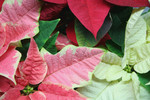
Flower of the Holy Night By Caleb Miller

Euphorbia pulcherrima is a flowering plant that grows in Mexico and Central America. It is commonly known as the Poinsettia Flower, named after South Carolinian, Joel Roberts Poinsett. He was the first U.S. Minister to Mexico and found the plant in an area of southern Mexico called Taxco del Alarcon. He sent some samples back home and introduced the flower to the United States. The flower is known in Mexico as the "Christmas Eve Flower." According to legend, a poor young girl had no gift to give at the Christmas Eve celebration. An angel told her that any gift given in love is a wonderful gift. She then picked weeds from the side of the road and wrapped them in a bouquet. She presented her weeds at the celebration and because of her sincerity, the weeds transformed into a beautiful red flower. That's how it became known as the Flower of the Holy Night. Poinsett died on December 12th, 1851 and in 2002 Congress created National Poinsettia Day to honor the poinsettia plant industry to be celebrated on December 12th every year.


Editor's Note: For more information on Joel R. Poinsett, there is a great biography of him available in "A History of the War Department of the United States; With Biographical Sketches of the Secretaries" by Lurton Dunham Ingersoll published in 1880 by F. B. Mohun. It is available on google books: http://books.google.com/books?id=mAsSAAAAYAAJ

Tuesday, December 7, 2010

Pearl Harbor by Caleb Miller

December 7th marks the anniversary of the attack on Pearl Harbor in Hawaii in 1941. Six Japanese aircraft carriers launched a total of 414 aircrafts to attack the harbor. Five midget submarines were sent as well. The aircraft had a total surprise advantage in the first wave, which was led by Commander Mitsuo Fuchida. Fires quickly erupted on ships and explosions rang through the air. A second wave of aircraft added to the damage. The cost for the Americans was high. Four battleships, two destroyers, and one other ship were sunk. The old battleship Utah, which had been commissioned as a target ship, capsized, which killed six officers and fifty-two other men. Eighteen planes had been destroyed and 155 were damaged. Casualties were high for the US military, with 2402 dead and 1,247 wounded. Civilians were also caught in the fire with fifty-seven dead and thirty-five wounded. The Japanese were not unscathed. Twenty-nine planes were shot down and all five submarines did not return. Fortunately for the US, most of the ships would be raised and/or repaired. Sadly, the battleships Oklahoma and Arizona would not serve again. The Oklahoma was capsized and was sold for scrap while the Arizona was broken by an explosion and left on the bottom of the harbor. She is still there today. The battleship Utah could also not be raised and is still at the harbor. Americans were outraged at the treacherous attack. Ironically, Japanese diplomats had been talking to the State Department thirty minutes before the attack. There are theories that the US Government had advance-knowledge of the attack, but we are still unsure. The President Franklin D. Roosevelt gave a famous speech about the attack, where he called it "a date which will live in infamy." We honor those who died in this infamous attack on its 69th anniversary.

Friday, November 12, 2010

SC Legislators Look Back to Move Forward with Secession, 13 November 1860

As the state of South Carolina prepared for secession, this General Assembly Resolution, dated November 13, 1860, revealed that the state’s leaders felt it wise to review the records of the state conventions considering Nullification (in 1832-1833) and secession (1852), as well as relevant acts and resolutions from those times.

The document seen below authorized the State Printer to print and bind 500 copies of these key records.

Citation: Resolution to Authorize the State Printer to Print and Bind 500 Copies of the Acts and Resolutions off the Current Legislative Session Together with the Proceedings of the State Conventions of 1832, 1832, and 1852. 13 November 1860. Resolutions of the General Assembly, 1779-1879. S165018. SC Department of Archives and History.

To view more records like this online, click here.